Unlock Your Rankings: SEO for Small Business Explained
The Truth About SEO: Why Your Website Isn’t Ranking Yet and How to Fix It

Almost every small business owner asks the same question: why isn’t my website showing up on Google after all that work? The short answer is SEO today isn’t a single tweak — it’s a coordinated mix of technical setup, content that matches search intent, credible backlinks, and a user experience that keeps people engaged. This guide walks through the most common ranking blockers, the ranking factors that matter in 2024, how UX affects visibility, and why DIY SEO often stalls. You’ll get a prioritized checklist to run now, concrete fixes for technical and content issues, and a local SEO playbook for Charleston, WV. Finally, we explain how a structured SEO plan — technical foundation, content calendar, backlink program, and regular measurement — actually speeds up results so more people find your business online.
Why Is My Website Not Ranking on Google?
Put simply, a page won’t rank when search engines can’t clearly understand what it is, judge its quality, or trust its signals compared to competitors. Problems usually fall into a few buckets: indexability issues, thin or off-target content, technical performance problems, and weak external signals like backlinks and citations. Start by diagnosing: check index coverage, run a performance audit, and ask whether the page truly answers the user’s question while showing E-E-A-T (experience, expertise, authoritativeness, trustworthiness). Then prioritize fixes: unblock crawling and indexing first, then improve performance and content so your pages can compete for the right queries.
Searchers often want a fast checklist to triage issues. Begin there before deep work.
- Crawlability and indexing problems can stop pages from ever appearing in search results.
- Thin or mismatched content won’t satisfy users or search engines.
- Slow load times and poor mobile experience reduce ranking potential and engagement.
- Few quality backlinks and weak local signals lower perceived authority.
- Poor on-site UX and confusing navigation hurt engagement metrics that search engines track.
Run checks in this order: indexing status, content relevance, technical performance, backlink quality, and UX signals. Fixing the first two usually gives the fastest visibility wins because they remove hard barriers to being found.
What Are the Most Common Technical SEO Issues Blocking Rankings?
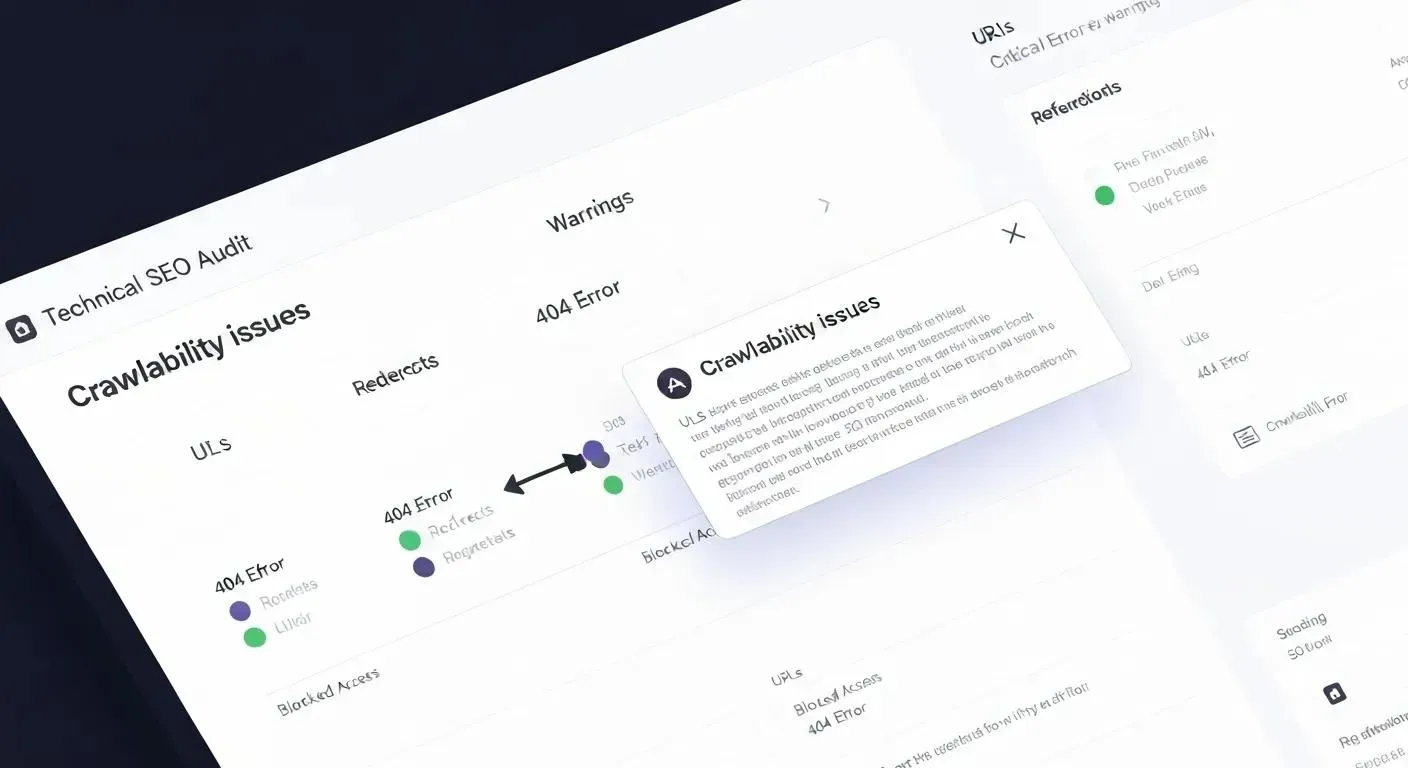
Technical SEO issues are often invisible but can instantly prevent pages from ranking — either search engines can’t reach content or they down-rank pages for poor performance. Typical problems include blocked crawling via robots.txt or noindex tags, missing or incorrect sitemaps, canonicalization mistakes that dilute signals, no HTTPS, and poor Core Web Vitals. Tools like Google Search Console, Lighthouse, and server logs uncover crawl errors, coverage gaps, and performance bottlenecks that should be fixed in order of impact.
The table below summarizes common technical areas, typical issues, and quick fixes to get pages indexable and performing better.
This table highlights the primary technical areas, common problems, and fast remediation steps.
| Technical Area | Common Problem | Rapid Fix |
|---|---|---|
| Crawlability | Pages blocked by robots.txt or noindex | Update robots.txt, remove inadvertent noindex, resubmit sitemap |
| Indexing | Missing sitemap entries or canonical conflicts | Fix canonical tags, submit sitemap in Search Console |
| Core Web Vitals | Slow LCP, high CLS, long interaction delay | Optimize images, enable caching, defer noncritical JS |
| HTTPS & Security | Mixed content or missing SSL | Install valid SSL certificate and update internal resources |
Clearing these technical blockers first opens the door for content and authority signals to actually move the needle. Once indexability and performance are solved, content and backlink work compound more predictably.
How Does Content Quality Affect Your Website’s Ranking?
Content quality determines whether a page answers search intent and earns E-E-A-T signals that signal trust and usefulness. Quality isn’t measured by word count alone — it’s about answering the user’s question clearly, showing practical experience or author expertise when relevant, and offering unique value like local context, data, or step-by-step guidance. Thin, duplicate, or keyword-stuffed pages rarely beat comprehensive, user-focused content that demonstrates authority.
To raise content quality, audit pages for intent fit, add depth where answers are missing, use clear headings and internal links to related topics, and show author or company credibility. These improvements lift engagement metrics and create assets that attract higher-quality backlinks.
What Are the Top SEO Ranking Factors in 2024 That Small Businesses Must Know?
In 2024, search rewards sites that pair solid technical performance with clear content authority and relevant external trust signals. Core Web Vitals and mobile-first performance remain foundational because they affect both user experience and conversions. E-E-A-T-style content that matches searcher intent and demonstrates real-world experience is essential for competitive searches. High-quality backlinks continue to serve as trust endorsements, and a clear site architecture helps surface important pages and improves crawl efficiency. Tackle crawlability first, then performance, then content depth and authority work.
Here are the prioritized ranking factors to focus on for measurable gains.
- Core Web Vitals and mobile-first performance tuned for real users.
- High-quality, intent-aligned content that demonstrates E-E-A-T.
- Relevant, authoritative backlinks from niche and local sources.
- Clear site architecture and internal linking to surface pillar content.
- Local signals (Google Business Profile, citations, reviews) for geo-targeted queries.
After prioritizing, use the table below to match each factor with its importance and a concrete target you can measure.
This table compares top ranking factors with importance and actionable targets for small businesses.
| Factor | Importance | Target / Action |
|---|---|---|
| Core Web Vitals | High | LCP < 2.5s, CLS < 0.1, INP acceptable; run Lighthouse audits |
| Content & E-E-A-T | High | Publish in-depth pages that match intent and cite sources |
| Backlinks | High | Acquire relevant links from niche sites and local partners |
| Mobile-first UX | Medium-High | Ensure responsive design and tap targets for mobile users |
| Local Signals | Medium | Optimize GBP, citations, and review management |
This prioritization helps small businesses spend limited resources where they’ll get the best return in visibility and conversions.
How Do Technical SEO Elements Like Site Speed and Mobile-Friendliness Impact Rankings?
Site speed and mobile-friendliness affect both ranking signals and conversions — search engines measure how fast and reliably users can access your content on real devices. Slow LCP or large layout shifts cause users to leave, which hurts engagement metrics. Non-responsive mobile pages lose ground in mobile-first indexing. Practical fixes include compressing and properly sizing images, using modern image formats, adding caching and a CDN, removing render-blocking scripts, and using responsive templates with readable navigation.
Track improvements with Lighthouse and Search Console: measure Core Web Vitals before and after changes and prioritize fixes by impact. Server and front-end performance work usually produces the fastest technical uplift for both rankings and conversions.
Why Are Backlinks and Domain Authority Still Vital for SEO Success?
Backlinks remain a primary external trust signal — they show topical relevance and authority. Quality beats quantity: links from relevant, authoritative sites in your niche or area carry more weight than generic directory links. Small businesses should focus on local partnerships, industry mentions, supplier references, and customer case studies to build a focused backlink profile while avoiding spammy tactics that can hurt rankings.
A defensible link strategy includes creating link-worthy assets (data-driven posts, local guides), targeted outreach to relevant sites, and regular monitoring to spot and address toxic links. Over time, steady, relevant links build domain trust and help pages rank for competitive queries.
How Does User Experience Influence Your Website’s Search Performance?
User experience ties directly to SEO because engagement signals like click-through rate, dwell time, and pages per session show whether a site meets search intent. Sites with clear hierarchy, fast pages, and readable content keep visitors engaged and drive conversions, which reinforces search engines’ view of quality. Improving UX involves both design and content: simplify navigation, make calls to action obvious, and structure pages so answers are easy to find.
Good UX starts with measuring key engagement metrics and testing improvements in small iterations. Use analytics to find pages with many impressions but low clicks, then refine titles and meta descriptions to raise CTR. The next section lists the metrics to watch and how to interpret them.
What User Engagement Metrics Should Small Businesses Monitor?
Focus on a short list of engagement KPIs that signal relevance and site health: click-through rate (CTR) from search, dwell time (time on page), pages per session, and conversion events tied to business goals. Tools like Search Console and GA4 show whether visitors find what they expected. Context matters: a short dwell time on a contact page is fine; a short dwell on a long article usually signals mismatch.
Track trends instead of obsessing over single data points. Improve CTR with better titles and meta descriptions, increase dwell time by using clear subheadings and useful media, and raise pages per session with thoughtful internal linking. Test changes one at a time to see what truly moves metrics.
How Can Improving Site Navigation Boost Your SEO Results?
Clear navigation reduces friction, raises pages per session, and helps search engines understand how content is related through internal links. A logical hierarchy with descriptive labels, breadcrumbs, and contextual links surfaces pillar pages and spreads ranking signals. On mobile, use a simplified menu and highlight key service pages so visitors reach conversion points quickly.
A practical approach: audit navigation to find orphan pages, restructure categories to mirror user intent, and add internal links from high-traffic pages to priority service or location pages. Focused navigation fixes increase discoverability and help important pages rank better.
Why Does DIY SEO Often Fail Small Business Websites?
DIY SEO often fails because owners patch symptoms without a clear strategy, don’t have enterprise tools or outreach networks, and underestimate the time needed to keep momentum. Technical audits, keyword research, content planning, and safe link building have steep learning curves; piecemeal fixes rarely deliver lasting results. Many see a short-term bump, then stall when follow-through isn’t consistent.
When DIY plateaus, pairing fast development with SEO discipline — or working with a partner — usually produces faster, measurable improvements. The next section lists common DIY limitations so you can decide what to keep in-house and what to outsource.
What Are the Limitations of DIY SEO Compared to Professional SEO Services?
DIY efforts often lack deep tooling, the ability to interpret nuanced data, and time to run steady content and outreach programs. Agencies and specialists offer strategic planning, ongoing audits, technical fixes, and outreach networks that DIY work rarely matches. Professionals also keep a measurement cadence and adapt to algorithm changes, avoiding regressions that DIY programs can suffer.
The table below contrasts typical DIY pain points with what professional help commonly provides to help you decide which tasks to outsource.
This comparison highlights where DIY falls short and what professional engagement typically delivers.
| Area | DIY Limitation | Professional Capability |
|---|---|---|
| Technical Audits | Limited depth, missing server-level diagnosis | Full audits with prioritized remediation plans |
| Content Strategy | Inconsistent publishing and shallow content | Pillar-cluster planning and editorial execution |
| Link Building | Sporadic outreach, limited network | Systematic outreach and relationships for quality links |
| Measurement | Ad-hoc tracking | Regular reporting and iterative optimization |
If the list above resonates, consider teaming with a structured partner who can implement prioritized fixes faster and more reliably.
SEO is a key foundation, but a complete digital marketing plan often includes other channels to boost visibility and conversions. For businesses targeting specific audiences, knowing how to use Facebook video ads can be a powerful complement to SEO efforts.
When you’re ready to move from scattered DIY tasks to coordinated execution, Five Day Solution pairs rapid website builds with SEO-first setup so small businesses get found faster. Their approach blends quick development with technical checks and content alignment — a practical path from audit to live pages for owners who need speed and clear strategy.
How Can a Structured SEO Strategy Help Your Website Get Found Online Quicker?
A structured SEO strategy speeds visibility by sequencing the highest-impact tasks, keeping execution consistent, and measuring results to refine the plan. The framework starts with a technical foundation to ensure indexability and performance, adds a content calendar focused on intent-aligned pillar pages, launches a targeted backlink program, and continuously improves UX from engagement data. Prioritizing the biggest blockers first makes later content and link efforts much more effective.
Below is a concise 90-day roadmap to produce measurable improvements quickly.
- Technical audit and rapid fixes to restore crawlability and Core Web Vitals.
- Publish 1–3 pillar pages targeting primary service queries with local context.
- Launch targeted outreach and clean up local citations to build authoritative links.
- Implement a measurement cadence and iterate based on CTR and engagement improvements.
What Are the Key Components of a Successful SEO Strategy?
Successful SEO includes a prioritized technical audit, a content plan mapped to search intent and local relevance, an ethical backlink program, and UX changes that improve engagement. Early deliverables should include a documented audit, a 90-day content calendar, a targeted outreach list, and baseline performance benchmarks. Ongoing measurement and governance make sure each effort is tracked and adjusted for steady, sustained gains instead of one-off spikes.
Search Engine Optimization for Business Visibility and Local Market Penetration
Digital transformation and stiff competition — both online and offline — make an effective marketing strategy essential. This research stresses the importance of local SEO for retail and small businesses looking to increase organic traffic. It offers practical recommendations for optimizing businesses in Google, shows how local optimization can improve position in the Local Pack, and provides a data schema for micro-marketing illustrated by a Ukrainian retailer. The study’s goal is to give actionable guidance that helps retailers boost organic visits and conversions through targeted local SEO.
Business optimization in the digital age: Insights and recommendations, A Natorina, 2020
Five Day Solution focuses on delivering websites quickly while setting them up with SEO first. Their services combine fast site builds with ongoing SEO support to move projects from audit to live pages while establishing the foundations needed for long-term ranking growth.
How Does Consistent SEO Effort Lead to Long-Term Ranking Improvements?
Consistent work compounds authority and relevance: publishing quality content expands topical coverage, steady link building grows domain trust, and ongoing technical upkeep prevents regressions as platforms and algorithms change. A staged timeline — quick technical fixes, then content expansion and link growth — often yields measurable improvements within months and more stable visibility by six to twelve months. The compound effect comes from repeated, focused effort that signals growing value to both users and search engines.
Track progress with monthly benchmarks and shift priorities based on what improves CTR, dwell time, and conversions. Regular attention avoids the common cycle of short-lived gains followed by declines.
How Can Local SEO Boost Your Small Business Rankings in Charleston, WV?
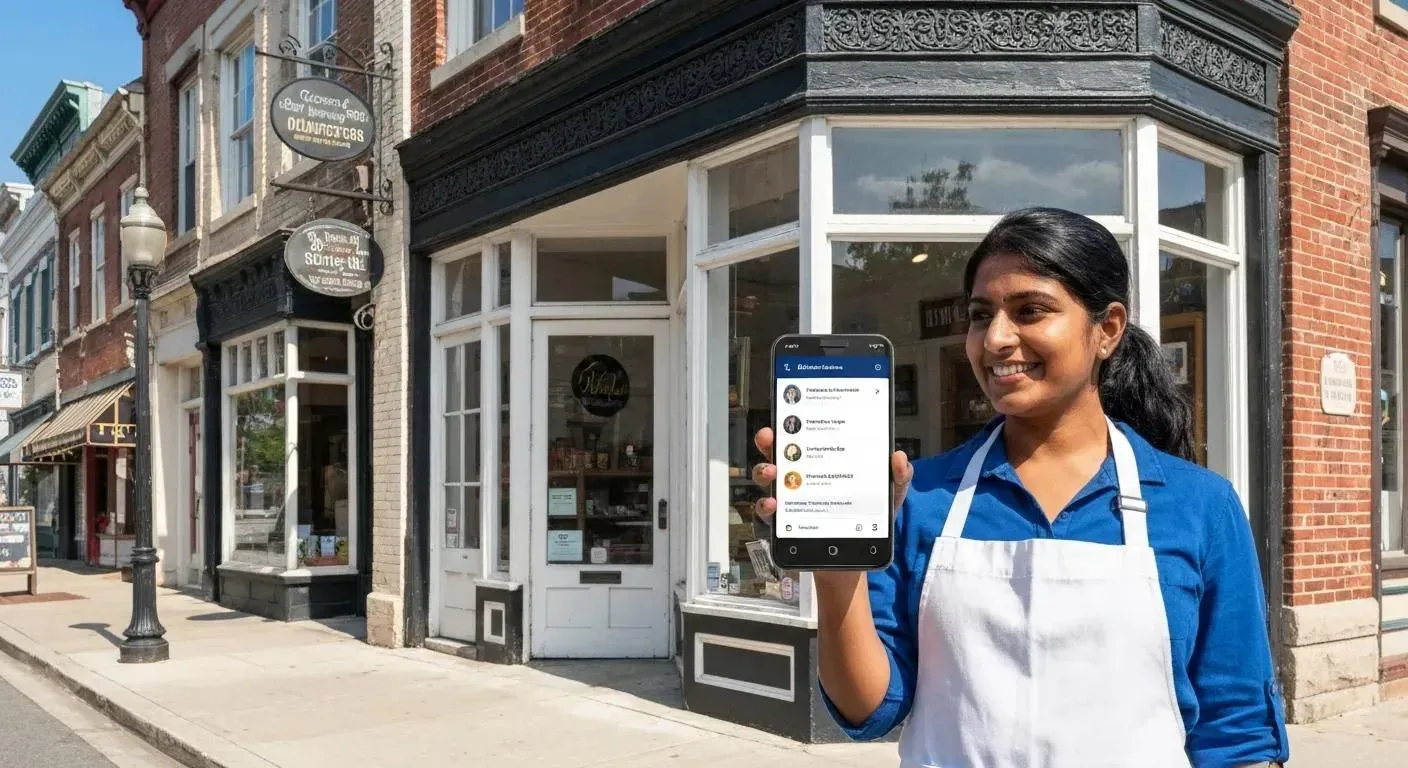
Local SEO aligns your online presence with geographic intent so nearby customers find you when they search for services. Local optimization centers on a well-maintained Google Business Profile (GBP), consistent NAP (name, address, phone) across citations, geo-targeted landing pages, localized schema, and active review management. For Charleston businesses, adding local details and resources helps pages compete for region-specific queries and drives calls and foot traffic.
Start by auditing your GBP and citation footprint, then create service pages with Charleston-specific content that answers local questions and references nearby landmarks or neighborhoods. The table below maps local elements to owner actions that produce measurable local visibility gains.
This table maps local SEO elements to concrete actions owners can take to improve local search performance.
| Local Element | Attribute | Owner Action |
|---|---|---|
| Google Business Profile | Categories, services, photos | Ensure accurate categories, add service list, upload high-quality photos |
| NAP Consistency | Name, address, phone | Standardize NAP across directories and website; use business address where appropriate |
| Reviews | Velocity and responses | Solicit reviews, respond promptly, and track sentiment trends |
| Geo-targeted pages | Local content + schema | Create service pages for Charleston neighborhoods with LocalBusiness schema |
Consistent local optimization increases your chances of appearing in the Local Pack and map-based queries, and supports organic rankings for geo-specific searches.
What Role Does Google Business Profile Optimization Play in Local SEO?
Google Business Profile optimization directly affects local visibility — GBP fields power map packs and local search features. Key elements include picking the right categories, listing specific services, adding attractive photos, posting updates and offers, and actively managing Q&A and reviews. Fill these fields with natural, locally relevant language and keep them current to signal relevance to users and search engines.
Post about local events, include Charleston references where natural in service descriptions, and watch GBP insights to see which queries drive calls and website clicks. Regular GBP upkeep strengthens other local signals and improves lead quality.
How Do Geo-Targeted Keywords and Customer Reviews Improve Local Search Visibility?
Geo-targeted keywords make pages explicitly relevant to regional searches by combining service terms with location and neighborhood names in titles, headings, and meta descriptions. Customer reviews add social proof and fresh user content that search engines treat as trust signals; review velocity and positive sentiment are tied to better local rankings. Encouraging specific, service-focused reviews and responding to them raises CTR and conversions.
Use practical review request templates and a steady cadence for asking satisfied customers to leave feedback. Monitor and reply to reviews quickly and showcase review highlights on local landing pages to build trust.
- Review request template example: "Thanks for your visit — would you share what you appreciated most about our service?"
- Geo-keyword placement: use location modifiers in service page H1s, meta descriptions, and structured data.
- Response cadence: reply to new reviews within 72 hours to show engagement.
These tactics, combined with accurate GBP data and localized content, create a durable local presence for Charleston businesses.
Business Contact and Local Credibility
Five Day Solution keeps a local presence in Charleston, WV, and can help small businesses implement the local and technical SEO steps above. Their office is at 222 Capitol Street Suite 522, Charleston, WV 25301 and the listed phone number is (304) 689-5329. For businesses that need rapid site builds tied to practical SEO workflows, combining local credibility with structured implementation helps deliver results faster.
This last detail reinforces that pairing fast website delivery with an SEO-first setup and local optimization produces the practical improvements that increase visibility and conversions.
Frequently Asked Questions
What is the importance of keyword research in SEO?
Keyword research uncovers the words and phrases your customers actually use. When you create content that matches those queries, you’re more likely to rank and attract relevant visitors. Good keyword research also finds long-tail opportunities with lower competition and higher intent. Regularly revisit keywords with analytics so your content stays aligned with changing search behavior.
How can I measure the success of my SEO efforts?
Measure SEO with a mix of KPIs: organic traffic, keyword rankings, click-through rate (CTR), and conversion rates tied to business goals. Use Google Analytics and Search Console to see how users find and interact with your site. Track engagement metrics like dwell time and pages per session to evaluate content quality. Review these metrics regularly and use them to refine your strategy.
What role does social media play in SEO?
Social media doesn’t directly change rankings, but it drives traffic, raises brand awareness, and can generate backlinks and engagement that indirectly support SEO. Social platforms help you amplify content, build relationships, and encourage user-generated content. Use social media alongside SEO to extend reach and attract the right visitors.
How often should I update my website's content for SEO?
Keep core pages reviewed every few months and refresh blog posts or articles more often. Fresh, accurate content signals relevance to search engines and keeps visitors returning. Update pages with new information, current keywords, and answers to user questions to maintain or improve rankings.
What is the impact of mobile optimization on SEO?
Mobile optimization is essential — Google uses mobile-first indexing, so your mobile experience affects ranking. A mobile-friendly site improves user experience, reduces bounce rates, and increases conversions. Key items: responsive templates, fast loading times, and clear navigation for touch devices.
How can I improve my website's local SEO?
Improve local SEO by claiming and optimizing your Google Business Profile, keeping NAP consistent across directories, and encouraging customer reviews. Create localized content that answers community-specific questions and use geo-targeted keywords. Partner with local organizations and events to build visibility and local links.
What are some common mistakes to avoid in SEO?
Common mistakes include skipping keyword research, keyword stuffing, ignoring performance and mobile optimization, and letting site structure get messy. Also avoid one-off fixes without a strategy. Run regular audits, follow best practices, and adapt as algorithms and user behavior change to avoid these pitfalls.