Transform Your Website into a High-Converting Sales Machine
Turn Your Website into a High‑Performing Sales Engine for Leads and Revenue

A brochure site looks good and shares information. A sales site consistently captures, qualifies, and converts visitors into measurable revenue. This guide walks you through turning a passive site into a conversion-focused platform with mapped conversion funnels, lead capture tactics, conversion-rate optimization, sales-driven SEO, and effective online ad campaigns. Many businesses lose opportunities because pages lack clear CTAs, automated nurture, and messaging that follows the customer journey—issues we resolve step by step. Five Day Solution turns that diagnosis into action, applying a focused process to convert existing sites or new builds into measurable sales platforms. Later sections break down the mechanics and expected ROI. Read on to learn the difference between brochure and sales sites, the must-have components of a conversion-first build, how automation and CRM scale nurturing, copy tactics that remove friction, and entity-based SEO that drives qualified traffic. With this framework you can audit your site, prioritize fixes, and estimate the sales impact of a targeted transformation.
What’s the difference between a brochure site and a sales site?
A brochure site mainly presents brand information and credentials. A sales site is built to capture leads, track conversions, and optimize for revenue. The key difference is intent-driven design: sales sites use conversion paths, targeted landing pages, and capture points that turn anonymous visitors into CRM records and buyers. The payoff is predictable lead flow and measurable ROI instead of vanity metrics like page views. Understanding that distinction explains how a sales site turns traffic into revenue through structured funnels and clear monetization points.
How does a sales site actually generate leads and revenue?
Sales sites generate leads by placing capture moments where they make sense in the buyer’s journey and routing those captures into qualification workflows. The engine is a conversion funnel: awareness content brings qualified visitors, focused landing pages collect contact details, automated nurture raises lead scores, and sales handoffs close deals. The concrete result is higher lead velocity and compounding improvements from conversion-rate optimization. For example, a lead magnet funnel (guide → landing page → form → nurture) can increase qualified leads measurably when combined with A/B testing and tracking.
Why do brochure sites struggle to convert visitors?
Brochure sites often favor aesthetics over conversion elements like CTAs, forms, and traceable paths, which stops visitors from moving toward purchase. More fundamentally, they lack lead capture and follow-up automation, leaving interested visitors unengaged and untracked. The practical outcome is wasted traffic and weak ROI reporting—because there are no CRM records or conversion events to measure. Fixing this means adding clear micro-conversions and analytics so every touchpoint feeds a measurable funnel.
What are the core components of a high‑converting sales website?
A high‑converting sales site combines intentional lead capture, sales-focused home and landing pages, clear CTAs, social proof, and performance optimization to support buyer intent across the journey. What makes them work is integrated design: CTAs and landing pages push visitors into lead forms, which feed CRM records and automated sequences that move prospects toward purchase. The result is measurable gains in lead volume and conversion rate when each element is aligned to intent and tracked continuously. The table below compares core components and the conversion lift you can expect.
When implemented correctly, these conversion components produce predictable improvements.
| Component | Implementation | Expected Conversion Lift |
|---|---|---|
| Lead Capture (forms, chatbots) | Short, context-specific forms; progressive profiling | 10–30% increase in captured leads |
| High‑Converting Landing Pages | Focused headline, single CTA, social proof | 15–50% lift in landing conversion rates |
| CTAs & Conversion Paths | Clear benefit-led CTAs and single next step | Reduces drop-off; improves micro-conversion rates by 20% |
| Social Proof & Trust Signals | Testimonials, logos, case snippets, reviews | Increases trust, improving conversion by 5–20% |
This side‑by‑side shows how tactical changes to structure and trust signals deliver measurable improvements in conversion and lead quality—and it helps you choose which lead capture methods to implement first.
Intro to lead capture: the next section compares forms, chatbots, and interactive content, and explains how each feeds CRM systems for qualification and follow-up.
How do lead capture methods help identify good prospects?

Lead capture tools—forms, chatbots, and quizzes—collect different signals and qualify prospects by intent and data depth. Forms are dependable for structured fields and direct CRM mapping; chatbots capture conversational intent and route urgent prospects; quizzes reveal behavioral signals for segmentation. The core benefit is data enrichment: each method creates CRM records (via landing pages, CTAs, and thank‑you pages) that enable lead scoring. That lets teams prioritize higher‑intent prospects and tailor automation to speed conversions.
Intro to CTAs and conversion paths: once you’ve identified prospects, the site must offer one clear next step that reduces friction and guides visitors into your funnels.
What role do clear CTAs and conversion paths play in optimization?
Clear CTAs give an obvious next step, and conversion paths guide visitors from interest to micro‑conversion to purchase using focused pages and forms. The mechanism is sequential friction reduction: each page sharpens the headline, CTA, and supporting proof so visitors need less effort to act. Top CTAs use benefit-first language, prominent placement, and single-purpose landing pages that remove distractions. Ongoing A/B testing of copy, color, and placement reliably yields incremental conversion gains.
How can automation improve your site’s sales and lead nurturing?
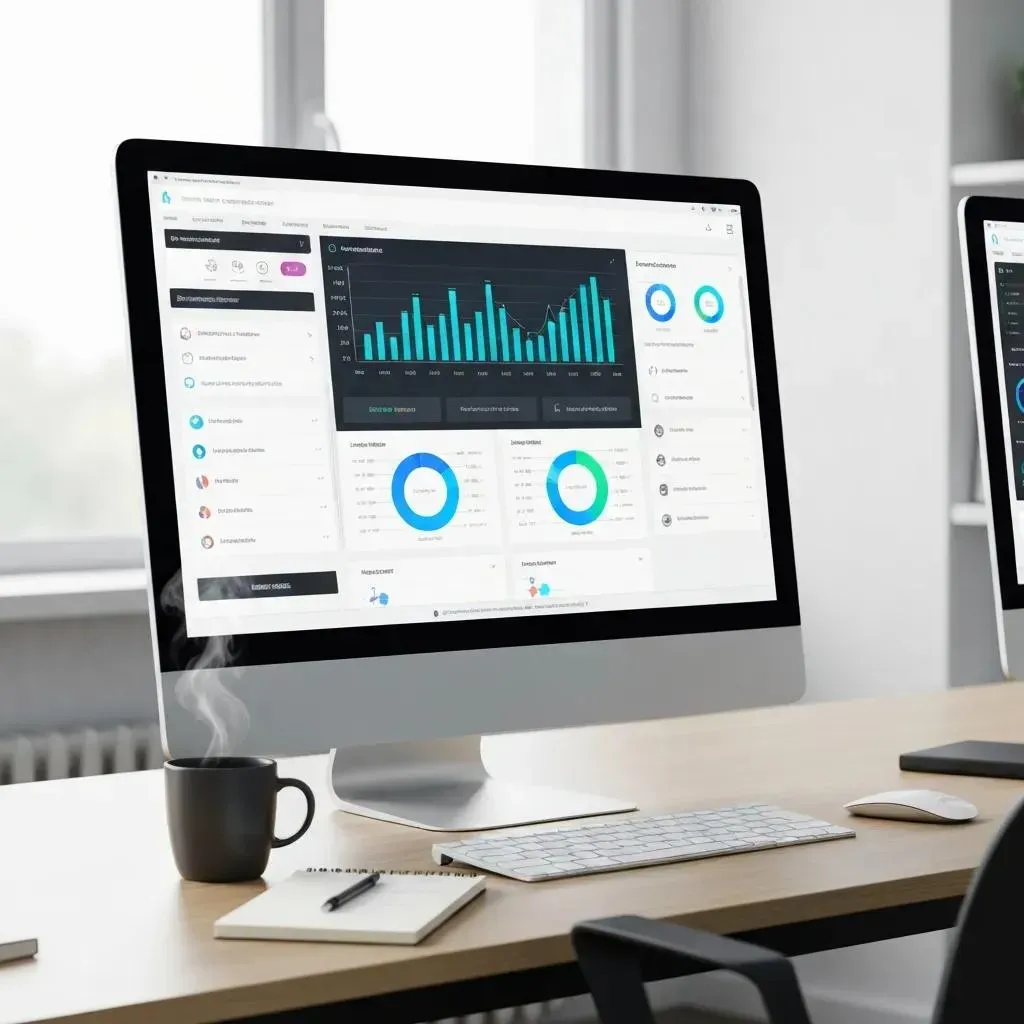
Automation scales qualification, follow-up, and personalization so leads flow through the funnel without manual bottlenecks. The mechanism is rule-based orchestration: CRM captures data, lead‑scoring rules prioritize outreach, and automated sequences deliver timely content. The practical benefit is faster response times and higher conversion rates because engaged leads get the right message at the right moment. The table below summarizes typical integrations and outcomes.
| CRM / Tool Type | Integration Type | Business Outcome / Metric |
|---|---|---|
| CRM (central contact store) | Form to CRM mapping and normalization | Faster sales follow-up; higher contact-to-opportunity rate |
| Email automation | Triggered sequences based on form or behavior | Improves lead-to-opportunity conversion by timing nurture |
| Chatbot / Live chatks | Real-time qualification with routing to CRM | Shortens response time; raises conversion on high-intent leads |
This table shows how mapping automation to clear metrics removes friction and speeds sales velocity, and it leads into best practices for building sequences and data flows.
What are the best practices for CRM integration and follow-up sequences?
Follow these essentials: map form fields to normalized CRM records, define straightforward lead scoring rules, and build short multi-step cadences that mix email, content, and sales outreach. The mechanism for success is data hygiene: consistent field names, deduplication, and source tracking let automation segment and prioritize accurately. A practical 3-step follow-up might be an immediate confirmation, a value-add email within 24 hours, and a tailored outreach on day 3 based on behavior. These sequences raise engagement and readiness to buy.
Intro to personalization: once sequences are running, personalization via behavior and content tokens deepens relevance and boosts conversion.
How does personalization through automation boost conversions?
Personalization uses behavioral triggers, dynamic content, and tokens to create experiences that match a visitor’s stage in the journey, lowering friction and raising relevance. The mechanism is trigger → action: a page visit or form response fires a tailored email or landing-page variant that aligns messaging to intent. The measurable benefits include higher open and click rates; when done right, personalized pages and emails consistently outperform generic variants. For example, dynamic landing content based on referral source or past downloads typically improves conversion versus non‑personalized pages.
How do messaging clarity and journey design maximize conversions?
Clear messaging and thoughtful journey design remove ambiguity about value and next steps, reducing cognitive load and increasing the chance a visitor converts. The mechanism is alignment: benefit‑first copy links directly to targeted CTAs and stage‑specific content to move prospects through the funnel. The outcome is a smoother path from awareness to decision because each touchpoint answers the prospect’s next question quickly. Below are actionable strategies to keep messaging clear across pages and campaigns.
Messaging clarity works best when you focus on concise value statements, supporting proof, and a clear path forward.
- Benefit‑first headlines that state the outcome the visitor cares about.
- Short supporting bullets that explain how the outcome is achieved.
- Immediate trust signals (case snippets, social proof) close to CTAs.
- Consistent language across ads, landing pages, and emails.
These tactics create a coherent narrative that nudges prospects to act; the next section covers copy tests and microcopy techniques to refine messaging.
What strategies ensure clear messaging that actually connects with your audience?
Start with a concise value proposition, use benefit‑led hero copy, and back claims with specific proof points to reduce skepticism. The mechanism is message testing: run headline variants and microcopy experiments to see which phrasing drives engagement and lowers bounce. A practical checklist: define your primary buyer, write a one‑line value prop, test three headline variants, and validate results through analytics. These steps align your language with buyer intent and cut friction at decision moments.
Intro to touchpoint mapping: after clarifying messaging, map how that message appears across stages so you can close gaps and prevent drop-off.
How can mapping customer touchpoints improve engagement and sales?
Touchpoint mapping identifies key interactions—awareness, consideration, decision—and assigns content and CTAs to each stage so visitors see the right message at the right time. The mechanism is stage-based alignment: awareness content educates, consideration content compares options, and decision content reduces risk with proof and offers. A sample map pairs blog traffic with a free guide, landing page CTAs with demos, and post-demo nurture with case outcomes to drive purchase. Mapping helps teams prioritize fixes at known drop‑off points and improve sales outcomes.
Which SEO strategies drive sales for a sales‑driven website?
Sales-driven SEO targets high‑intent queries and converts that traffic using entity-based SEO, technical performance, and on‑page content structured for buyers. The mechanism is semantic alignment: entity-based SEO maps your services and their relationships so search engines and AI better understand your offering and surface it for intent-rich queries. The benefit is more qualified visibility and higher organic lead volume. The table below outlines tactics, targets, and expected visibility or lead gains.
Entity-based SEO tactics connect directly to measurable visibility and lead outcomes.
| SEO Tactic | Target | Expected Benefit on Visibility / Lead Volume |
|---|---|---|
| Entity Mapping & Schema | Clear business entities and relationships | Better AI and search understanding; more qualified impressions |
| Technical SEO (speed, mobile) | Core Web Vitals and mobile responsiveness | Higher rankings and lower bounce; increased organic leads |
| Local SEO & Reviews | Local intent queries and GBP‑like signals | Improved local visibility; higher conversion for nearby searches |
This comparison shows how semantic and technical SEO together drive higher‑quality organic traffic. The following sections unpack entity mapping and technical priorities in more detail.
How does entity‑based SEO improve ranking and lead generation?
Entity SEO defines relationships between your core concepts—services, use cases, and customer questions—using schema and internal linking to signal relevance for buyer‑intent queries. The mechanism is structured context: mapping entities and attributes creates semantic relationships search engines use to match queries with solutions. Practical steps include listing target entities, adding schema markup, and building topical hubs that connect related pages. The result is improved ranking for intent‑rich queries and more conversion-ready organic traffic.
What are the best local and technical SEO practices for sales sites?
Prioritize site speed, mobile‑first design, consistent local citations, and schema that highlights services and locations. The mechanism is performance plus locality: faster pages and correct local markup reduce friction and boost trust for users ready to act. A practical checklist: optimize Core Web Vitals, ensure mobile responsiveness, add local service schema, and maintain consistent directory listings. These fixes increase organic visibility and raise the conversion rate of inbound traffic.
Why is Five Day Solution the fastest way to turn your site into a revenue engine?
Five Day Solution is a focused service that converts existing sites or builds new ones with a sales‑first approach—delivering lead capture, conversion path design, automation, clear messaging, and sales-focused SEO on a rapid timeline. The speed comes from a compressed, cross‑functional workflow that aligns copy, design, and automation in short decision cycles so deliverables are production ready by engagement end. The client benefit is fast time‑to‑value: high‑converting pages and automation that start generating measurable leads and revenue quickly. The next section outlines the day‑by‑day process and key handoffs that make this possible.
How does the Five Day Solution process produce rapid transformation?
The Five Day Solution breaks work into focused phases—discovery & strategy, copy & funnel design, build & automation, testing & optimization, and launch handoff—each with clear deliverables and client decision points. The mechanism is parallel execution: while designers build landing pages, automation specialists map CRM flows, and copywriters craft benefit‑led messaging, progress happens at once. Deliverables usually include a sales‑focused homepage or landing page, CRM‑mapped lead capture forms, an automation sequence, and a measurement plan. Fast decision cycles and a prioritized scope turn strategy into production assets within the compressed timeline.
What ROI and sales growth can you expect from the Five Day Solution?
Results vary by traffic and baseline conversion, but common outcomes are higher lead capture, improved landing page conversion, and faster lead‑to‑opportunity cycles thanks to automation. ROI is shown with before/after measurement: track monthly leads, landing conversion rate, and average response time before the project and compare to post‑launch numbers. For example, doubling landing conversion from 2% to 4% on 10,000 monthly visitors doubles monthly leads—and with a known lead‑to‑sale rate you can calculate revenue uplift. For teams seeking quick, measurable gains, using these metrics delivers clear ROI and a roadmap for scaling.
- Audit First: Measure current leads, conversion rates, and top traffic sources to set a baseline for ROI.
- Prioritize High‑Impact Fixes: Launch focused landing pages, CTAs, and automation on your best pages first.
- Measure and Iterate: Track performance and run A/B tests to refine offers and quantify lift over time.
These steps create transparency and turn site changes into measurable revenue growth.
Frequently Asked Questions
What common mistakes do businesses make when moving from a brochure site to a sales site?
Typical missteps include not defining clear conversion goals, skipping reliable lead capture, and failing to align content with the buyer’s journey. Teams also often underinvest in A/B testing and analytics, so they can’t see what’s working. Finally, neglecting automation means missed follow‑ups and wasted leads. Addressing these areas is essential for a successful transition.
How can I measure the effectiveness of my sales site?
Track KPIs like conversion rate, lead capture rate, and customer acquisition cost. Use analytics for user behavior and a CRM for lead progression and sales outcomes. Regularly review these metrics and run A/B tests on landing pages and CTAs to learn what resonates with your audience.
What role does content marketing play in a sales site?
Content attracts and educates prospects, builds authority, and supports each stage of the buyer’s journey. Well‑targeted content drives organic traffic, helps SEO, and feeds lead magnets that convert. Pair content with lead capture and nurture to move visitors from awareness to purchase, often amplified through strategic social media management.
How important is mobile optimization for a sales site?
Critical. A large share of traffic is mobile, and a poor mobile experience causes high bounce and lost conversions. Search engines also favor mobile‑friendly sites. Fast pages, intuitive navigation, and clearly placed mobile CTAs significantly improve engagement and conversion.
What are effective lead nurturing strategies for a sales site?
Use personalized email sequences, behavior‑based content delivery, and timely follow‑ups. Segment leads by interest and engagement, and automate sequences that mix helpful content with appropriate sales outreach. Webinars, exclusive offers, and relevant resources keep leads engaged and drive them closer to conversion.
How do I align SEO with my sales goals?
Target high‑intent keywords that signal buyer readiness, and weave them into your content strategy. Fix technical SEO (speed, mobile) and use schema to clarify services and intent. Keep content fresh and measure organic traffic alongside conversion metrics to ensure SEO drives sales, not just visits.